
What neuroscience can teach us about why we hurt, and why finding the right treatment isn't always as simple as finding the damage.
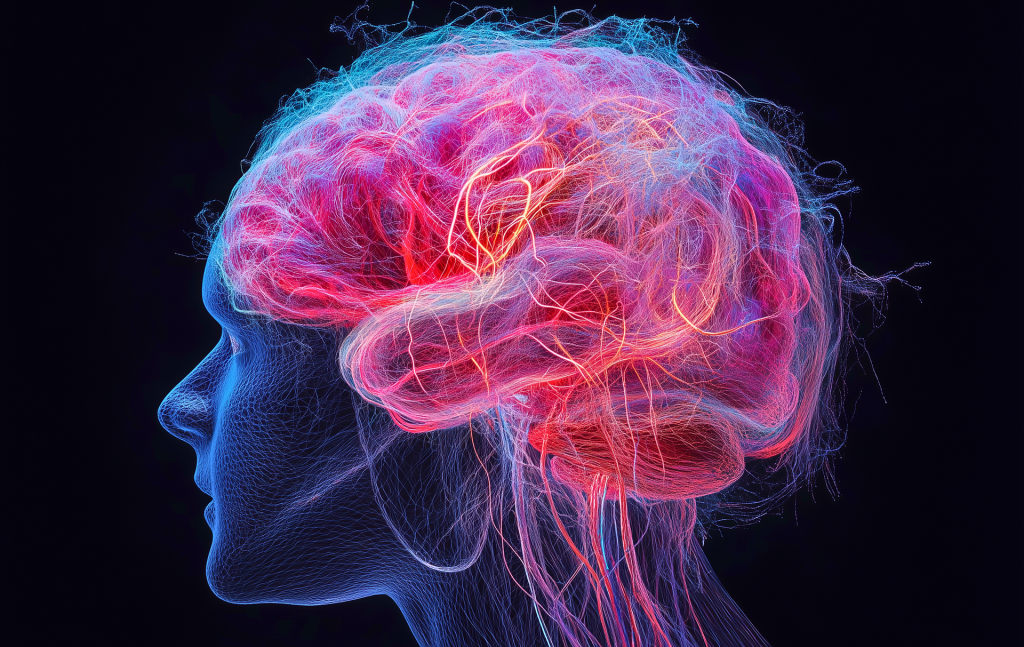
Almost two years ago, an MRI may quite literally have saved my life.
I had developed an epidural abscess—an infection near my spine—and the MRI showed my doctors exactly what they needed to see so they could give me the proper treatment.
For me, what showed up on that scan mattered enormously.
But here’s what’s interesting.
Researchers have found disc degeneration and bulging discs in people whose backs don’t hurt. And the older we get, the more common these findings become. In one large systematic review, disc degeneration was found in 37% of pain-free 20-year-olds—and 96% of pain-free 80-year-olds.
The same is true with rotator cuff tears in pain-free shoulders, and meniscal tears in knees that function perfectly well.
This raises an interesting question:
If the same finding can exist in someone who hurts and someone who doesn’t, how do we know it’s actually what’s causing the pain?
A scan is very good at showing us what a structure looks like.
But it isn’t always able to tell us why a person hurts.
Pain is not a damage meter
How much something hurts doesn’t necessarily tell us how much tissue damage there is.
And that does not mean the pain isn’t real.
It means that tissue damage and pain aren’t actually the same thing.
In fact, this was one of the things I found most fascinating when I started digging into the neuroscience of pain:
Your injured tissues don’t actually send “pain” to your brain.
They send information.
So if pain isn’t simply a message traveling from an injured part of your body to your brain, where does it actually come from?
So what actually creates pain?
Imagine you step on something sharp.
Sensory receptors in your foot detect what has happened and send warning information toward your spinal cord and brain.
But that information isn’t pain.
Your nervous system processes it alongside a huge amount of other information: what’s happening around you, what you’ve experienced before, what you expect, where your attention is, and whether your brain believes your body needs protecting.
Pain is the experience that emerges from all of that processing.
A simple way to think about it is:
The tissues provide information.
The nervous system processes that information in the context of past experiences, emotions, expectations and what’s happening right now.
Pain is the experience that emerges from all of it.
This helps explain something that otherwise seems rather strange: two people can have very similar injuries and experience very different amounts of pain.
It also helps explain why the amount of pain someone experiences can change even when the state of the tissues hasn’t changed very much. For example stress and fatigue can certainly amplify pain without changing the tissue damage.
The nervous system has something rather like a volume control. Signals can be amplified or dampened depending on what else is happening in the system.
And there’s a very good reason for that.
Pain is protective
Pain is supposed to get your attention.
If you injure an ankle, pain changes the way you walk. If you burn your hand, you pull it away. Pain encourages you to protect an injured area while it heals.
Normally, as the danger decreases and tissues heal, that protective response settles down.
But sometimes it doesn’t.
And that’s where persistent pain starts to get particularly interesting.
Your nervous system can learn pain
Our nervous systems are built to learn.
That’s generally a very useful ability. Repeated experiences change the way neural pathways respond.
But the pain-processing system can learn too.
When warning signals are persistent or repeated, the threshold for triggering a protective response can become lower. The nervous system may begin responding to signals that previously wouldn’t have been enough to produce pain, or it may produce a much larger pain response to the same input.
The system becomes more sensitive.
Sometimes the area in which someone experiences pain begins to expand as well. Something that originally hurt in one small area may eventually hurt over a much larger region.
This increased sensitivity is often called sensitization.
You could think of it as the pain system becoming easier to turn up and harder to turn back down.
In a sense, the nervous system has become very good at producing pain.
And importantly, the pain is still completely real.
But it may no longer be a straightforward reflection of how much tissue damage exists.
Why does the volume stay turned up?
There isn’t one answer.
Ongoing tissue irritation or inflammation may still be contributing.
Illness, nerve injury, poor sleep, physiological or emotional stress, previous experiences and the experience of ongoing pain itself can all influence the way the nervous system processes information.
And this does not mean, “You’re stressed, so just relax.”
Nor does it mean persistent pain is “all in your head.”
It means the pain system doesn’t exist in isolation. It is part of a nervous system that is continually integrating information from throughout your body and from the world around you.
Which is why the old distinction between physical pain and psychological pain isn’t particularly helpful.
Emotions, memories, expectations and stress physiology are physical processes too. They interact with inflammation, tissue signals, movement, sleep and everything else the nervous system is processing.
So emotional or psychological factors influencing pain doesn’t make the pain any less physical or real.
And finding something physically wrong doesn’t necessarily mean you’ve found the whole reason someone hurts.
Can the pain volume come back down?
Fortunately, the nervous system’s ability to change works in both directions.
Some of the nervous-system and brain changes associated with persistent pain don’t appear to be permanent. Research has found that as chronic pain improves, some of those changes can improve too.
The same ability to change that can help pain become persistent also gives the nervous system the capacity to change again.
But that doesn’t mean there’s one simple way to “retrain your brain” and make chronic pain disappear.
Because pain isn’t created by one thing.
For one person, ongoing inflammation or tissue irritation may be a major driver. For another, the nervous system may have become highly sensitized. Poor sleep or ongoing physiological stress may be adding fuel to the fire.
Often, several things are happening at once.
And that means two people can hurt in exactly the same place—and need completely different treatment.
So perhaps the most useful question isn’t:
“Is this pain physical or psychological?”
It’s:
What is keeping this person’s pain system turned up?
That’s the question I find much more interesting clinically.
Not simply Where does it hurt?
And not only What diagnosis does this person have?
But what is contributing to the pain in this particular person?
Because the diagnosis tells us what you’re experiencing.
It doesn’t necessarily tell us why it’s happening.
And why is often where things get interesting.
